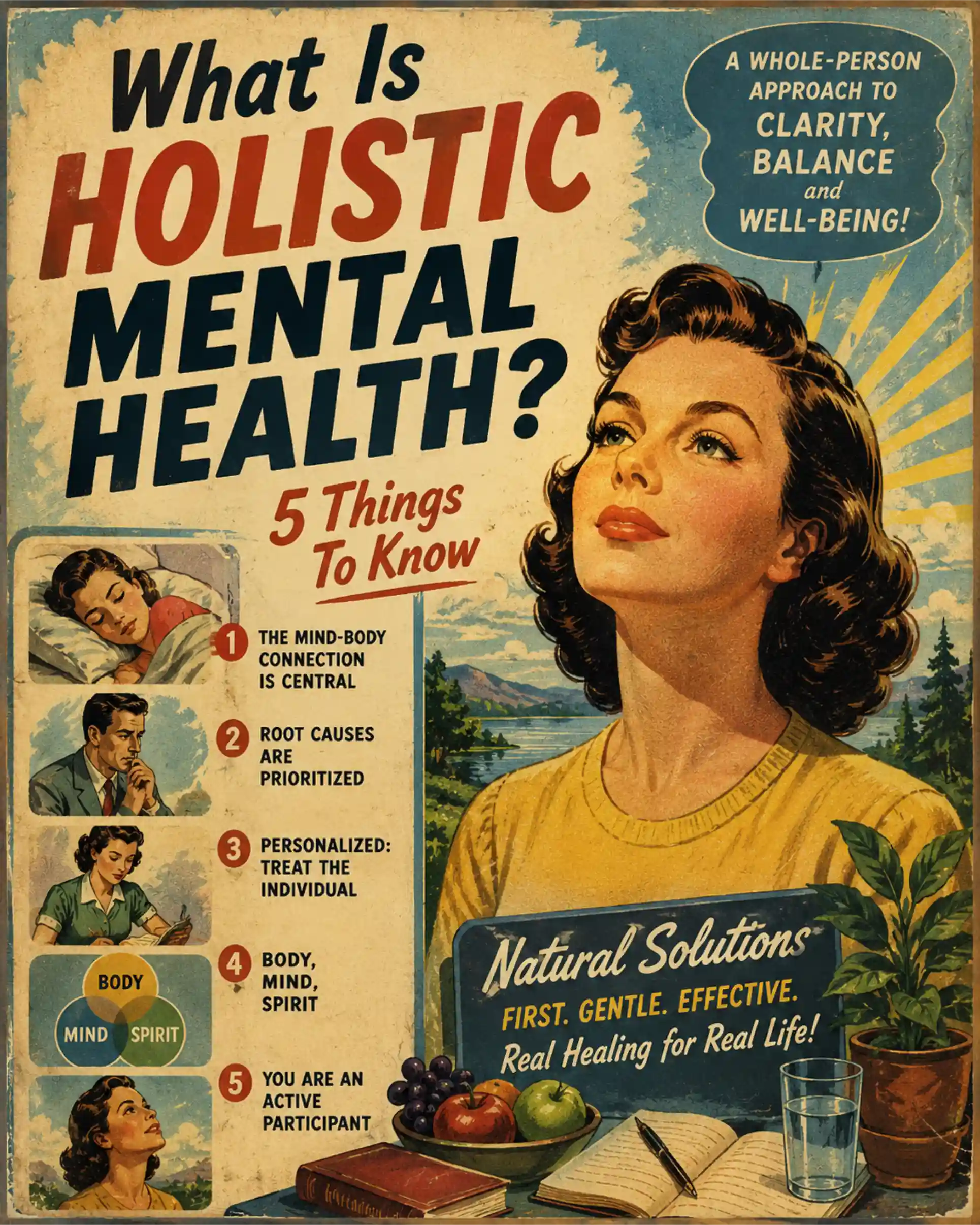
Your energy, sleep, stress levels, relationships, diet, movement, sense of purpose, and even the environment around you all play a role in how you feel mentally and emotionally.
That’s the heart of holistic mental health.
Rather than looking at the mind in isolation, holistic approaches recognize that the body, mind, and spirit are deeply connected. When one area suffers, the others often follow. The good news is that when you begin supporting your whole self naturally and consistently, healing can begin in powerful ways.
Holistic wellness reminds us that everyday habits and deeper self-awareness matter too, more than most people realize.
If you’re trying to improve your mental wellbeing, here are five important things to know about the effective Freedom from Stress Framework I discovered regarding holistic mental health.
1. The Mind-Body Connection Is Real, But Within Your Control
While the mind is separate from the body, one can affect the other. Your nervous system, hormones, immune system, digestion, and sleep cycles all influence how you think and feel.
This is why periods of chronic stress often lead to physical exhaustion, headaches, digestive issues, inflammation, or weakened immunity. It also explains why poor sleep, unhealthy eating habits, or a sedentary lifestyle can contribute to anxiety, irritability, brain fog, and low mood.
Many people search endlessly for emotional healing while overlooking the physical foundations that support mental clarity and emotional balance.
Some of the most powerful natural tools for improving mental health are surprisingly simple:
- Consistent, restorative sleep, including reduced overstimulation and screen time (download our 10 Steps to Better Sleep for help with this)
- Balanced nutrition, including hydration
- Daily movement or exercise, including time outdoors
And, perhaps most vital, a comprehensive blood test can and should be given to identify the deficiencies that are causing symptoms.
These body health practices may sound basic, but they profoundly affect body systems and stress regulation.
For example, regular exercise supports the release of endorphins and other neurotransmitters associated with improved mood and reduced stress. Healthy sleep helps regulate cortisol levels and allows the brain to recover emotionally and cognitively. Nutrient-dense foods provide the building blocks your brain needs to function properly. Vitamin B1 in particular is good for the overall nervous system, body health, and could be used to fend off stress.
In many cases, people begin noticing improvements in emotional resilience and mental clarity simply by improving these foundational areas first.
Holistic mental health starts with understanding that caring for your body is also caring for your mind.
2. Our Holistic Healing Looks For Actual Root Causes
Another core principle of holistic mental health is that symptoms are signals, not just problems to suppress like pharmacology.
Many people experience anxiety, burnout, emotional exhaustion, or depression without ever asking why these feelings developed in the first place. After ruling out underlying body health issues, there is a way to solve the area of your life you’re wishing was better. I wish I had known about this sequence when I was trying to help my mom with her symptoms and had salvaged her fro the unfortunately broken mental health system. There is a link between hidden subconscious or unconscious stress in our mind and how it affects our body. Ready to solve that stress?
Holistic approaches encourage deeper exploration.
Instead of focusing on symptom management, Freedom from Stress practitioners advocates often examine:
- Hidden subconscious stress
- Lifestyle imbalance
- Trauma or unresolved emotional pain
- Environmental stressors
- Relationship dynamics
- Lack of meaning or purpose
- Overwork and burnout
- Poor boundaries
- Nutritional deficiencies
- Nervous system dysregulation
This perspective matters because lasting emotional healing usually requires more than temporary relief.
For example, someone experiencing anxiety may not simply need ways to calm down in the moment. They may need better sleep, healthier boundaries, unresolved trauma support, reduced work stress, improved nutrition, and more restorative routines.
Similarly, emotional numbness or burnout may not be a personal weakness at all. It may be the result of living in survival mode for too long without proper recovery.
The genuine and effective Holistic mental health delivered from the framework I discovered asks a compassionate question:
“What all has to improve in order to get you living a more ideal scene? Then creating your unique plan. What is this person’s mind and body trying to communicate?”
That shift in perspective can be incredibly empowering.
Rather than seeing yourself as broken, you begin recognizing that your symptoms may be understandable responses to prolonged stress, imbalance, or emotional overload.
This doesn’t mean difficult emotions disappear overnight. Healing takes time. But identifying and addressing root causes creates more sustainable and meaningful progress than surface-level approaches.
3. Holistic Mental Health Is Highly Personalized
There is no single path to healing because no two people are exactly alike.
What helps one person feel emotionally balanced may not work for another. That’s why this framework is effective. Holistic mental health emphasizes individualized programs and increased self-awareness. You can start now with the simple personality test and get a Freedom from Stress Analysis to identify the exact areas that will give you relief.
Your lifestyle, personality, trauma history, stress tolerance, environment, relationships, beliefs, and physical health all influence your emotional experience.
Effective Holistic care, encompassing body, mind and soul, recognizes that healing is not one-size-fits-all.
Instead of forcing people into rigid systems, it encourages curiosity and personalization.
Questions and objectives become:
- Is there an area or areas draining your energy?
- Identifying habits to improve your mental clarity
- Are there specific environments that increase stress?
- Which relationships support your wellbeing?
- Are you connected and living in your true purpose?
These questions help you reconnect with yourself instead of relying solely on external solutions.
The right wellness checklist can help guide you toward answers.
Many people struggle because they believe they are “failing” at wellness. In reality, they may simply need an effective combination of tools and support.
Our delivery of holistic mental health through our Freedom from Stress Framework allows room for self-discovery and compassion throughout the healing process. Our signature Burnout and Bliss program is exactly what you’ve been looking for to receive stress relief and live in your vision of creating your vision.
4. Body, Mind, And Spirit
One of the defining principles of holistic mental health is the understanding that wellness involves the whole person.
This includes:
- Body — physical health, solving any underlying health conditions, nutrition, movement, sleep, hormones, nervous system regulation
- Mind — mental health, thoughts, beliefs, emotions, stress patterns, emotional resilience
- Spirit — spiritual health, purpose, meaning, values, connection, hope, and real peace and calm
Even people who do not consider themselves spiritual often recognize the importance of purpose and meaning in emotional wellbeing.
Each of us need connection, hope, inspiration, and a sense that life matters. When people feel disconnected from themselves, others, or their purpose, emotional suffering often intensifies.
This is why holistic approaches frequently encourage practices such as:
- Time in nature
- Gratitude practices
- Mindfulness
- Prayer or spiritual reflection
- Creative hobbies
- Volunteer work
- Meaningful relationships
- Quiet reflection and rest
These practices help calm the nervous system while reconnecting people to something larger than daily stress and pressure.
The goal is not perfection. The goal is balance.
Modern life often keeps people in a constant state of stimulation and emotional overload. Many are exhausted not only physically, but mentally and spiritually as well.
When the body, mind, and spirit are supported together, you feel more grounded, resilient, and emotionally stable.
5. You Are An Active Participant In Your Healing
Perhaps the most empowering aspect of holistic mental health is this:
You are not powerless.
While support from me and my team of Freedom from Stress Specialists, loved ones, and healthcare providers can be incredibly important, your daily choices also matter enormously.
Healing is often built through consistent small actions repeated over time.
This may include:
- Improving sleep habits
- Reducing toxic influences
- Creating healthier boundaries
- Practicing our specific mindfulness techniques
- Spending more time outdoors using our Mind Muscle ExerciseTM
- Moving your body regularly
- Identifying and limiting overstimulation
- Building supportive relationships
- Nourishing your body with healthier foods
- Making time for rest and recovery
These habits may seem simple, but together they help regulate the nervous system and support long-term emotional wellbeing. Courses like my Freedom from Stress Course teach the secrets that are holding each of us back.
Effective holistic mental health encourages people to become active participants in their own care rather than passive observers waiting to feel better someday.
This approach can restore a sense of agency and hope.
It also reminds people that your better life filled with great happiness is rarely linear. There will be good days and difficult days. Progress often happens gradually until a breakthrough with the RESET and RISE Elite level Program, for qualified individuals that have already achieved optimum body health.
Every healthy choice matters.
Every moment of self-care matters.
Every step toward emotional awareness and balance matters.
And over time, those small choices can create meaningful transformation. And, when you’re ready to unleash your true potential, I am ready to help you accomplish that.
Final Thoughts
Effective holistic mental health is not about ignoring science or avoiding professional care. It’s about recognizing that true emotional wellbeing involves the entire person: body, mind, and spirit.
Natural solutions and healthy lifestyle practices are often the best place to begin because they support the very systems your body relies on to function well.
For many of us, improving sleep, reducing stress, eating better, moving regularly, reconnecting with purpose, and addressing emotional wounds or hidden subconscious stress with The Freedom from Stress Framework creates significant improvements in mental clarity and emotional healing.
Most importantly, genuine holistic wellness encourages compassion and responsibility.
You are not a diagnosis or a collection of symptoms. You are a whole human being deserving of care, understanding, balance, and support.
Often healing begins not with one dramatic change, but with small, consistent steps back toward yourself. If you’re curious at the things that might be holding you back, a Freedom from Stress Analysis may be just the thing you need.
Sincerely hope you take the chance to do this for yourself. I discovered this from a very intense journey. My gift to you. I’m rooting for you. If you would like a complimentary clarity call to understand the entire Framework, please Booking Here
Love, Miriam