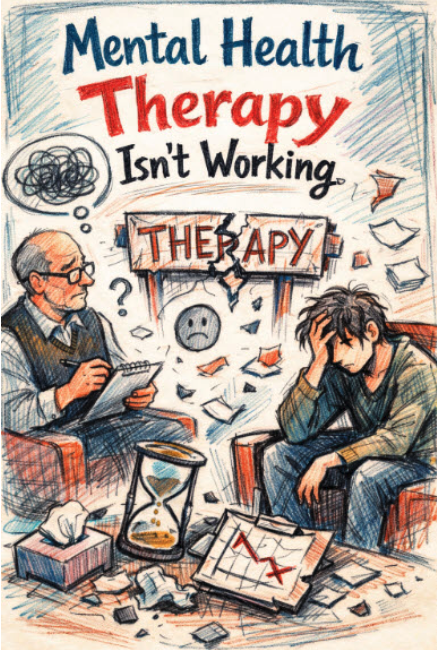
More people than ever are seeking therapy, downloading mental health apps, and talking openly about emotional struggles. On the surface, this looks like progress.
Yet the numbers tell a troubling story.
Suicide rates in the U.S. have risen by about 30% since 2000. Nearly one in three adults now reports symptoms of depression or anxiety, roughly triple the rate seen in 2019. About one in 25 adults lives with a serious mental illness such as bipolar disorder or schizophrenia. And in late 2022, only 31% of adults described their mental health as “excellent,” down from 43% two decades earlier.
So what’s going on?
For many people, counseling is a lifeline. But the modern approach to mental health often focuses too narrowly on managing symptoms rather than restoring balance in the whole person.
When it comes to modern therapy:
- We treat anxiety
- We label depression
- We medicate stress
But we rarely pause to ask:
What kind of life is this person living?
Today’s world places relentless pressure on the nervous system. Constant digital noise. Financial insecurity. Social isolation. Poor sleep. Processed food. Little movement. No time to breathe. No space to reflect. No sense of meaning beyond survival and productivity.
When therapy becomes a once-a-week conversation dropped into an otherwise unhealthy lifestyle, getting lasting relief can start to feel like trying to empty a flooded basement with a teacup.
True healing doesn’t come from addressing the mind alone. It comes from supporting the whole person: mind, body, and soul.
I often remind clients that emotional health is not built solely in an hour-long session. Mind-body healing is built in small, daily choices that reduce stress and improve our lives.
I help clients set realistic goals, find balance again, and build healthier routines that support lasting wellness. My approach is always to meet people where they are and walk alongside them with education, guidance, and encouragement.
That might look like:
- Learning how to calm stress through breathing, movement, and sleep
- Rebuilding routines that include real rest, not just distraction
- Reducing inputs that quietly fuel anxiety, such as constant news, endless scrolling, caffeine overload
- Strengthening the body so it can better support emotional resilience
- Exploring purpose, values, and connection; the deeper anchors that build strong foundations
When emotional care includes the body’s biology, the mind’s patterns, and the soul’s need for meaning, something powerful happens: people stop feeling broken and start feeling capable.
- Stress becomes manageable.
- Anxiety becomes understandable.
- Hope returns, even as happiness becomes possible.
The mental health crisis we see today is real. But so is hope.
With the right support, practical tools, and a whole-person approach, you can rebuild stability, rediscover strength, and create a life that feels worth waking up for again.
Healing is possible. Not overnight. Not perfectly. But steadily.
One grounded step at a time.
Be blessed,
Miriam