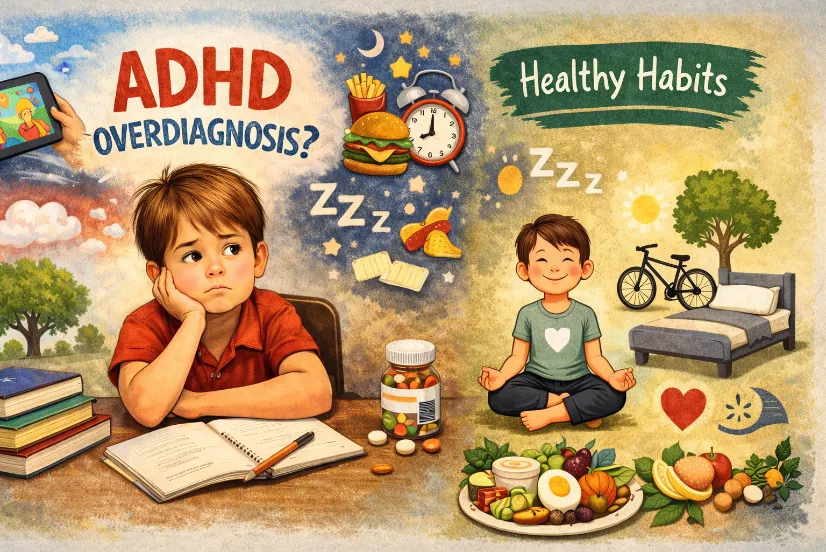
Is This Really ADHD? A Conversation Every Thoughtful Parent Deserves
ADHD is one of the most commonly diagnosed mental health conditions in the United States. According to the Centers for Disease Control and Prevention, approximately 7 million children ages 3–17 have been diagnosed.
Seven million.
That number deserves thoughtful conversation.
Research published through the National Institutes of Health has suggested that some children may be overdiagnosed, and that the potential harms of treatment can sometimes outweigh the benefits.
As a holistic mental health advocate for over 25 years, and as someone who has personally witnessed how the psychiatric system fails families, this conversation is not academic to me. It is deeply personal.
If you’re here, you may be asking:
Is this really ADHD?
Maybe a teacher suggested an evaluation.
Maybe medication was mentioned.
Maybe you’re watching your child struggle and your heart feels torn.
Let me say this clearly:
You are not wrong for asking deeper questions.
Could It Be Biology?
ADHD is diagnosed through behavioral observation. There is no biological test.
That means before accepting a lifelong label, we must ask:
What is happening beneath the surface?
- Blood sugar instability can affect focus.
- Iron deficiency can impair concentration.
- Magnesium supports nervous system regulation.
- Thyroid imbalance can alter energy and mood.
- Gut health influences brain chemistry.
- Chronic sleep deprivation can mimic ADHD almost perfectly.
Children deserve a full-body look instead of a psychiatric label.
Comprehensive testing, including bloodwork to evaluate nutrient deficiencies, inflammation, thyroid function, toxic exposures, or possible infections, should be considered before medication becomes a response.
Sometimes what looks behavioral is biological.
Gentle detoxification or even hyperbaric oxygen therapy could be explored to support brain and nervous system health.
This is not about denying ADHD exists.
It is about ruling out underlying biological conditions thoughtfully and responsibly.
ADHD or Exhaustion?
One of the most overlooked contributors to behavioral challenges is sleep.
When a child is not deeply rested, you may see:
- Impulsivity
- Irritability
- Poor concentration
- Emotional imbalance
What some children truly need is nervous system regulation and anxiety relief — not necessarily a stimulant.
Restoring circadian rhythm, limiting nighttime screens, increasing natural light exposure, and building consistent bedtime routines can dramatically improve attention and emotional balance.
Sometimes the answer is regulation. This sleep checklist may help address various symptoms through a structured bedtime routine.
Here’s a pro tip for parents: I used to have my son run races, always encouraging him to beat his previous time. There are also many practical techniques our team shares related to exercising the Mind Muscle™.
ADHD or Nutritional Stress?
The body’s health is the foundation of mental clarity.
Ultra-processed foods, excess sugar, artificial dyes, and low protein intake can destabilize blood sugar and impact attention.
The brain requires stable fuel, hydration, minerals, and healthy fats to function well.
When nutrition stabilizes, emotional balance often improves.
Strengthening the Mind Muscle™
Inside our Freedom from Stress programs at WeHelp Group, we teach the Mind Muscle™ technique.
Just as physical muscles strengthen with practice, the “mind muscle” strengthens through intentional repetition.
The Mind Muscle™ helps children and parents:
- Interrupt stress patterns
- Redirect attention
- Regulate emotional responses
- Build internal structure
- Support nervous system regulation
When practiced consistently, it becomes a powerful tool for anxiety relief and emotional balance.
As the nervous system becomes regulated, children naturally make healthier choices around sleep, movement, and nutrition because the body and mind are deeply connected.
We cannot separate emotional health from physical health. The solutions are not always found in psychiatry alone or traditional psychology alone, but in a broader, integrative perspective.
ADHD or Stress?
Sometimes hyperactivity is anxiety.
Sometimes inattention is overwhelm.
Sometimes impulsivity is a stress response.
Always we must consider, there is a natural and holistic solution. Children are uniquely who they are and deserve love, attention, care…not to be labelled and diagnosed.
Children today absorb enormous stimulation and pressure. Without tools for nervous system regulation, their bodies communicate through behavior.
Behavior is communication.
Before assuming there is a mental illness, we must ask:
What is this child trying to tell us?
A Strong and Caring Position
Medication may not address root contributors such as sleep disruption, nutritional imbalance, chronic stress, or emotional overload.
Parents deserve to explore:
- Biological contributors
- Sleep patterns
- Dietary stability
- Stress levels
- Emotional regulation tools
Before committing to long-term pharmacological intervention.
Children deserve that diligence.
I look forward to the day when every doctor fully honors the Hippocratic Oath.
If You Are Questioning, You Are Thoughtful
If you have searched:
“Is ADHD overdiagnosed?”
“Could this be sleep?”
“Could nutrition cause ADHD symptoms?”
“Are there natural alternatives before medication?”
You are not unreasonable. You are a thoughtful parent seeking clarity.
At WeHelp Group, our Freedom from Stress Counselors can help families evaluate emotional triggers, introduce techniques for exercising the Mind Muscle™, support nervous system regulation, and build a foundation of sleep, nutrition, and movement that promotes emotional balance and anxiety relief.
We begin with understanding.
If you would like compassionate guidance in exploring your child’s unique situation before accepting a diagnosis, you can schedule here:
Your child is not a diagnosis.
They are a whole person: body, mind, and soul.
The most powerful thing we can do is pause, ask deeper questions, and strengthen their foundation before accepting a lifelong label or medication.
With compassion and courage,
Miriam Putnam